…and Affection
By: Rabbi Dr David Fox
When my great Rosh Yeshiva, Rabbi Simcha Wasserman ztz”l, finally left Los Angeles for Jerusalem, I missed his warmth and guidance. My parents a”h too had a close relationship with him, and it was hard for us to accept that Los Angeles no longer had his presence in our midst. He had been our role model for the breadth of Torah Judaism: in his scholarship, his communication skills, his teaching, and in the ways in which he interacted with everyone who turned to him or chanced to meet him. He was the Torah luminary of the Western United States, and one of the great giants of Orthodox Judaism in its finest and fullest forms.
The year he left for Jerusalem was the year that two of my younger sisters were attending seminaries there. My youngest sister opted to stay on over the Pesach break from school, whereas the rest of us returned to LA for Pesach with my late parents. When Rabbi Wasserman learned that my sister would be in Jerusalem, he and his wonderful Rebbetzin insisted that she join them for the Pesach Seder, declaring that she was “family” to them. The Wassermans had lost their respective parents and siblings in the Holocaust (other than the youngest Wasserman, R’ Dovid, who predeceased our Rebbe whilst residing in New York). The Wassermans also had no children of their own, and often stated that their many, many students and their families were “their children.” So she had the delight of participating in the Rosh Yeshiva’s Pesach Seder and experiencing the customs and practices of a Torah leader.
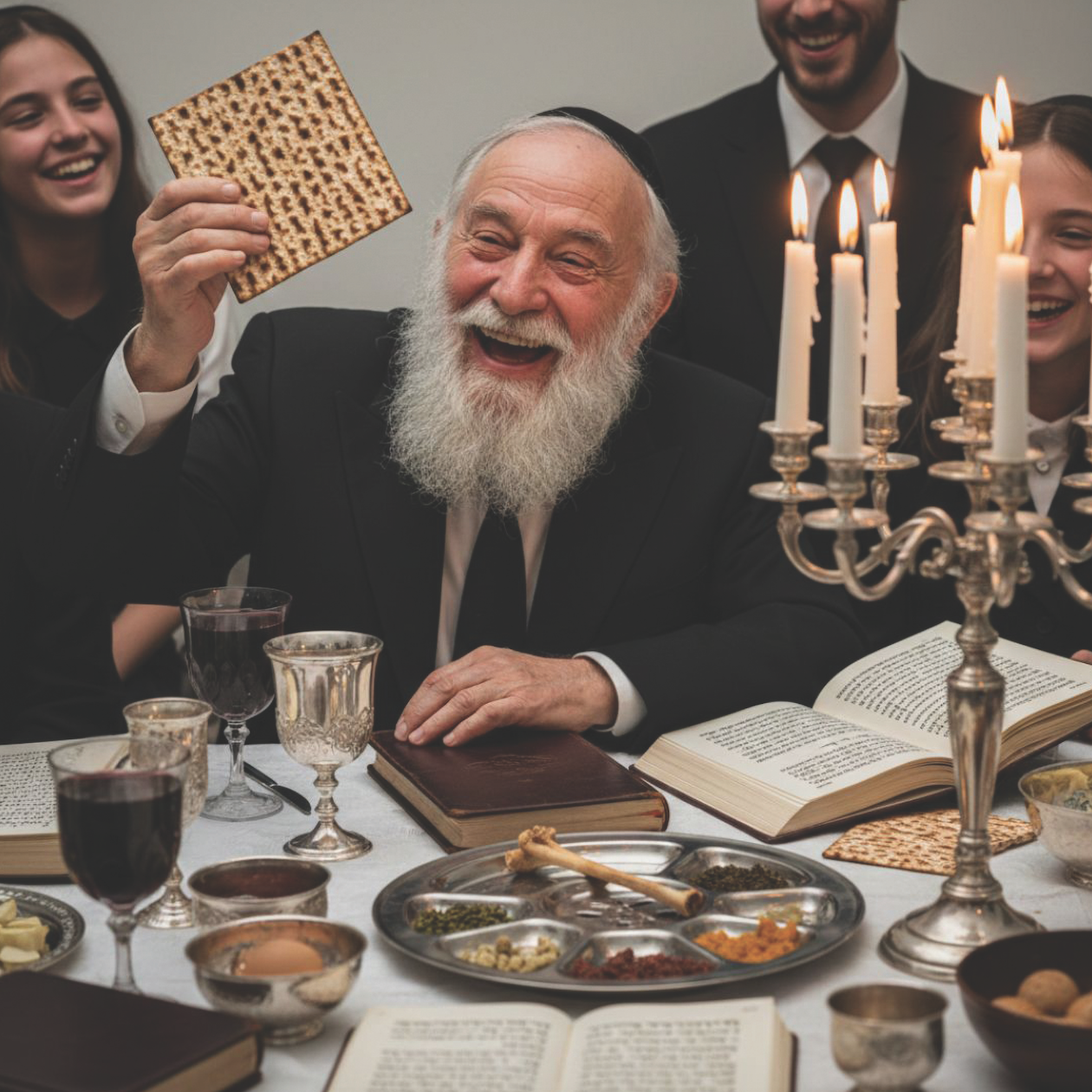
When my sister and I next met, she regaled me with stories about that Pesach, describing his approach to reading and explaining the Haggadah and bringing its richness to life in the present. We looked at the customs which were practised, contrasting them with the customs which our parents modelled for us at the Seder. In our family, the custom was for the children to hide the afikomen — the final portion of matzah — and our father would search for it, then agree to “pay a ransom” to get it back so that the Seder could continue. Some families have the father “steal” the afikomen and the children must then hunt for it. In my house, now that I am a father with children and grandchildren of my own, the children hide it and on the first night my wife and I bargain to retrieve it by offering a gift to each child, and on the second night we offer a “Torah gift” of something which each child wants, whether a special book or some other Judaica treat. We also print up little paper “Fox mitzvah dollars” which we give out whenever a child asks a good question or offers a nice interpretation. Meanwhile, I asked my little sister about the Wassermans’ custom with their afikomen.
She shared this story. As the youngest person at the Seder, it was her task to “steal” the afikomen, which she did, successfully concealing it so that the Rosh Yeshiva could not find it. He then said to her that he would need to buy it back, asking her what she would like from him in exchange for the matzah. She was genuinely stunned, unsure of what to do next. She stammered nervously, saying, “Where would I get the nerve, the chutzpah, to ask the Rosh Yeshiva for anything?!”
“You will get it from the same place that you found the chutzpah to steal it from me in the first place!”
As everyone at the table sat in quiet, unsure of what would happen next, our beloved Rosh Yeshiva smiled and replied, “You will get it from the same place that you found the chutzpah to steal it from me in the first place!” His warm mirth put everyone at ease. The Wassermans imbued their Torah with love and taught mitzvos with affection – the most effective tools for inspiring others.